How to buy Aboriginal art ethically and support artists directly
By The Black Canoe · · 5 min read
Buying a piece of Aboriginal art can be one of the most rewarding things you do as a collector, whether it is your first work or your fiftieth. It can also go wrong. Fake and poorly sourced "Aboriginal-style" products have been a long-running problem in Australia, and even genuine work can reach the market through arrangements that do not treat artists fairly. The good news is that buying ethically is mostly about asking a few clear questions and choosing where you buy with care. This guide walks through those questions, then explains exactly how buying works at The Black Canoe.
Start with where you buy
The single biggest decision is the seller. In general, the most direct ways to support Aboriginal artists are:
- Buying directly from the artist, at an exhibition, an open studio or through their own channels.
- Buying from an Aboriginal community art centre, or from a gallery that sources work from art centres. Art centres are owned and run by their communities and work with the artists who paint there.
- Buying from Aboriginal-owned galleries and businesses, where the people making decisions about the work are part of the community it comes from.
- Buying from galleries and dealers who can explain clearly where every work came from, and who are happy to answer questions.
Be cautious about souvenir-style items with no artist named, prices that seem too good to be true for a large original, and sellers who become vague when you ask about a work's history.
The questions worth asking
A reputable seller will welcome these. If you get clear answers, that is a good sign. If you get evasive ones, keep your money in your pocket.
- Who is the artist? A genuine original should have a named artist. For many artists you will often see life dates alongside their name, such as "Gloria Petyarre (c1942–2021)".
- Where did the work come from? Ask about provenance: was it bought from an art centre, directly from the artist, from a private collection, or from another dealer? Which art centre or community is the artist connected to?
- What documentation comes with it? Ask what paperwork the seller holds about the work's origin, and what you will receive. Keep everything you are given together with your invoice.
- How was the artist paid? It is fair to ask whether the artist, or their art centre, was paid properly for the work.
- Is it an original, a limited edition or a reproduction? All three can be legitimate, but you should know which one you are paying for.
Two things every buyer in Australia should know about
The Indigenous Art Code
The Indigenous Art Code is a voluntary industry code of conduct for people who sell Aboriginal and Torres Strait Islander art. It sets out standards for fair and ethical trade with artists. Dealers can choose to sign up, and you can check whether a particular business is a member on the Code's own website. Membership is one useful signal among several; it does not replace asking your own questions.
The Resale Royalty scheme
Australia has a resale royalty right for visual artists. When eligible artworks are resold commercially, through a gallery, dealer or auction house, a royalty can be payable to the artist or their estate. The scheme is managed by Copyright Agency. It is a good reminder that buying art in Australia is not only a one-off transaction: an artist can benefit when their work changes hands later on. If you are buying on the secondary market, it is worth understanding how the scheme applies.
Respecting the work once it is yours
Owning a painting is not the same as owning its imagery. Copyright generally stays with the artist, so photographing a work for your own records is fine, but reproducing it on merchandise, prints or marketing needs the artist's permission. The same respect applies to the stories and cultural knowledge that sit behind many works: if you are unsure about how to share or describe a piece, ask the gallery you bought it from.
How buying works at The Black Canoe
The Black Canoe is an Aboriginal-owned and operated gallery and café founded by Yorta Yorta and Bundjalung Winyarr Jodie Matthews. We are committed to creating opportunities for artists at all stages of their careers, and to connecting artists with collectors and audiences in an inclusive and welcoming environment. Here is how a purchase works with us:
- Every work is original and one of a kind. Every piece in our shop is unique. Once it sells, it is gone, and it shows as "Sold".
- Choose a piece and select "Buy this piece". You will be taken to a secure payment page handled by our payment partner.
- We arrange collection or shipping with you. Once payment is confirmed, we contact you by email to arrange collection from the gallery or shipping.
- Ask before you buy. Questions about a specific piece? Get in touch before buying, by phone on 0406 499 888 or by email at info@theblackcanoe.com.au. Ask us any of the questions above.
Prices are listed in Australian dollars on each work's page, and you can browse by artist from our artists page.
A look at what is in the collection
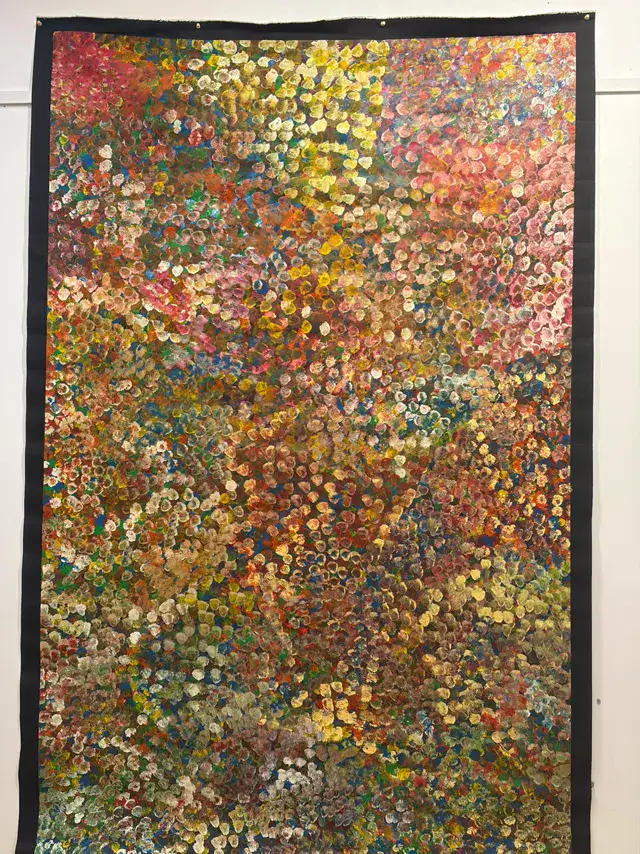
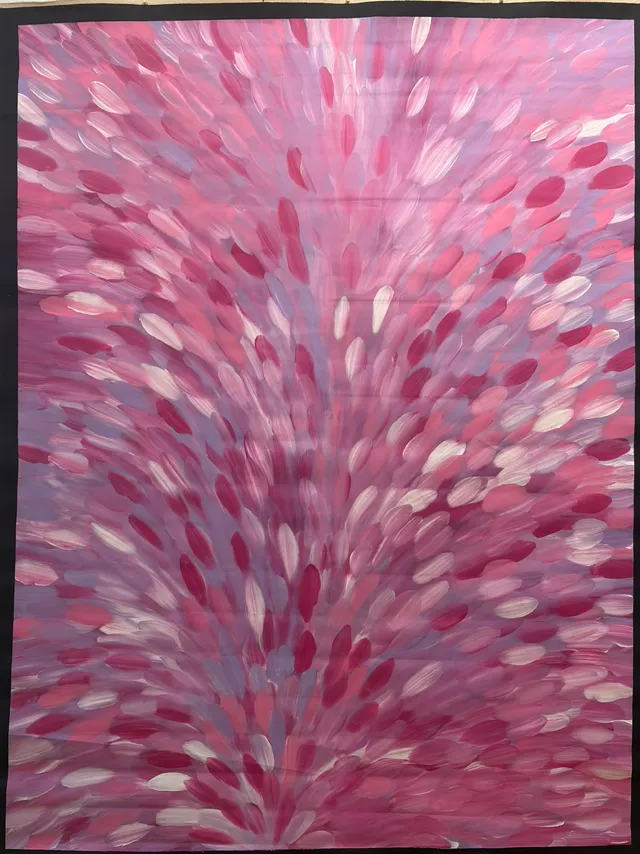
The image at the top of this post is Bush Medicine Leaves by Gloria Petyarre (c1942–2021), 2000 x 1500mm, $20,000. It hangs alongside major works such as Bush Plum by Polly Ngale Nelson (c1940–2022), 1300 x 2050mm, $12,000; Untitled by George Hairbrush Tjungurrayi (c1947–), 1750 x 990mm, $20,000; and My Country by Kudditji Kngwarreye (c1928–2017), 1400 x 1000mm, $5,000.
At a different scale and price point, our collection of works by Molly Hunt includes Throw Net & Bait (600 x 897mm, $2,000), Mighty Boab (1200 x 900mm, $2,000) and Nanas Damper (1800 x 900mm, $2,800). You can read more about everyone in the collection in Meet the artists.
See it in person
Nothing beats standing in front of a work before you buy it. The Black Canoe is at Shop 1, 1-3 Botany Rd, Waterloo NSW 2017, open Tuesday to Sunday, 10am – 4pm, and there is always a coffee waiting while you look. Check what is on the walls right now on our exhibitions page, and if you are thinking about hosting an event among the art, see Book our space.
Buying ethically is not complicated. Buy from people who know the work, ask where it came from, keep the paperwork, and respect the artist's rights after it comes home. Do that, and your purchase supports the people who made it.